

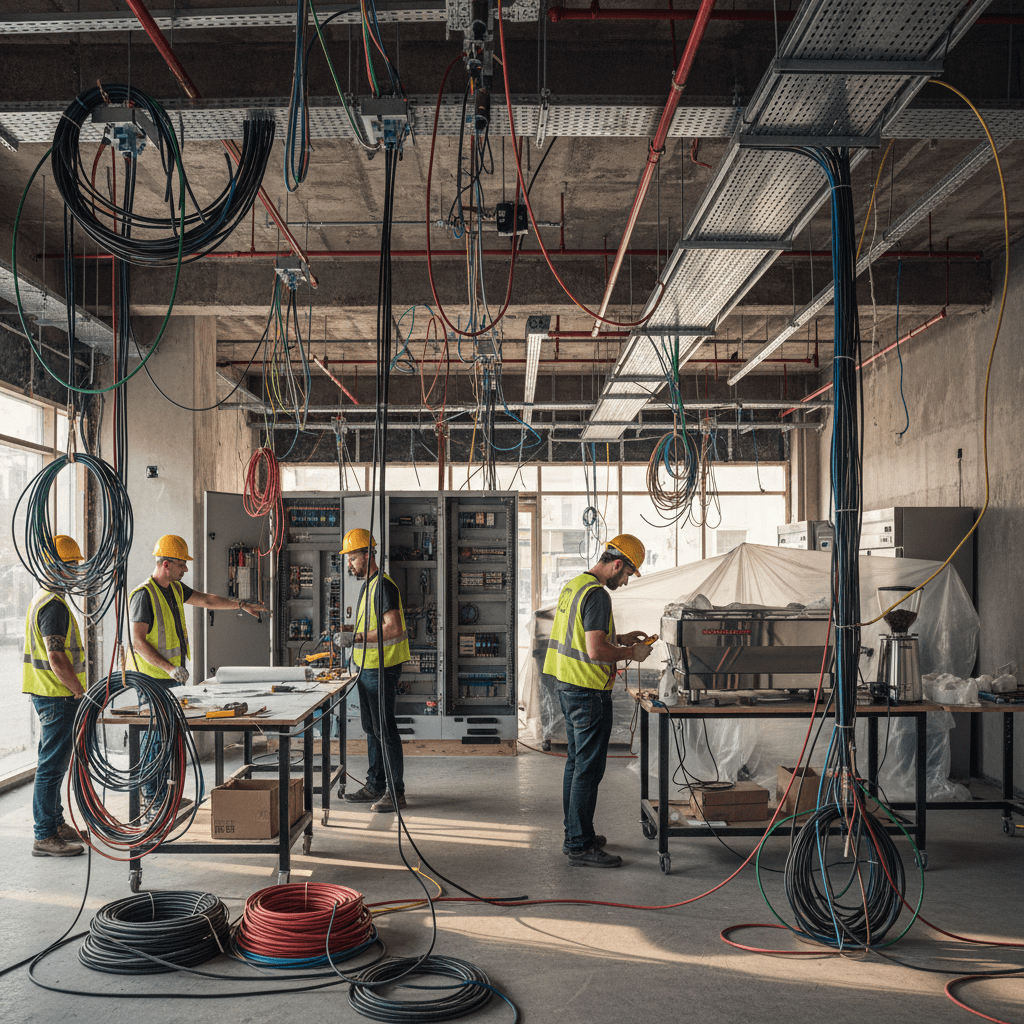
Electrical Considerations Before Cafe Launch
Opening a cafe is about more than coffee blends and menu design. The electrical system is the backbone of daily operations. If power is under planned, equipment fails, service slows, and repairs cost time and money. Early attention to wiring, circuit layout, and power capacity protects both equipment and customer experience.
This article walks through the main Electrical Considerations Before Cafe Launch. It gives practical steps and examples you can use when meeting an electrician, requesting permits, or creating a budget. Read on for tips that save money and prevent last minute surprises.
Electrical Considerations Before Cafe Launch overview
Think of electrical planning as part of your operational blueprint. A small espresso bar has different needs than a full service kitchen. Key areas to address include total power demand, panel capacity, circuit separation for appliances, safety devices near water, and backup power for refrigeration.
Start by mapping every piece of equipment with a power rating. This makes conversations with a licensed electrician concrete. Examples include espresso machines, commercial grinders, ovens, convection or combi units, dishwashers, refrigeration units, air conditioning, hot water units, and lighting. Each item affects the final layout of circuits and wires.
Calculate realistic power needs early
Begin with a full inventory of equipment and the wattage or amperage listed on nameplates. If a nameplate is missing, manufacturer specs are usually available online. Add a margin of 20 to 30 percent to account for simultaneous use. That margin prevents overloading during peak service hours.
Make a detailed equipment list
Organize the list by fixed appliances and mobile items. Fixed items include ovens and refrigeration. Mobile items include warmers and milk steamers. Note startup surge for motors and compressors. A refrigerator compressor can draw three times its running amperage at startup. That matters when several compressors kick on at the same time.
Plan for peak demand and load scheduling
Peak demand is the highest power draw you will see during service. Consider staggering the start times for large appliances. For example, delay the dishwasher cycle by 10 minutes after the oven is turned on. Practical scheduling like this reduces peak demand and can avoid a costly panel upgrade.
Service capacity and panel upgrade considerations
Confirm the incoming service capacity at the building. Many older spaces have a single phase 100 amp panel. A cafe with multiple ovens and espresso machines often needs a 200 amp panel or three phase service. Switching to a larger service requires coordination with your utility company and can take several weeks.
Panel upgrades bring additional costs for meter relocation, trenching if a new feed is required, and permits. Ask for written estimates that list these items separately. That improves budget planning and reduces surprises during renovation.
Dedicated circuits, grounding, and safety devices
Assign dedicated circuits for major appliances. Shared circuits are a common cause of nuisance tripping. Critical items that usually need dedicated lines include espresso machines, refrigeration, dishwashers, and ovens. Grounding and bonding are non negotiable for safety and code compliance.
Make sure areas near water have ground fault circuit interrupters. Wet areas include sinks, dishwash zones, and near espresso machine steam wands. GFCI devices reduce shock risk and are often required by local code.
Lighting layout and general power distribution
Good lighting affects mood and work safety. Plan separate lighting circuits for service areas, dining areas, and back of house. Use LED fixtures to reduce continuous power draw. Label every breaker and circuit in the panel to speed repairs and daily checks.
- Task lighting for the bar and prep counters
- Ambient lighting for dining spaces
- Emergency and exit lighting integrated into separate circuits
Place outlets where staff work to avoid long extension cords. A clean layout reduces trip hazards and prevents accidental unplugging during rush periods.
Energy management and load control tactics
While designing the system, consider simple load control strategies. Timers, staged startup for large machines, and smart scheduling reduce peak draws without expensive equipment. For example, program warmers to turn on ahead of opening and stagger dishwasher cycles during slow periods.
Voltage drop is another consideration. Long runs of cable can reduce voltage at the appliance and stress motors. Use appropriate gauge wiring for long distances and consult your electrician on recommended maximum run lengths for each circuit.
Backup power planning and surge protection
Loss of power can ruin food inventory and require emergency closures. Decide whether a backup generator or targeted backup for refrigeration is needed. A small automatic transfer switch with a dedicated generator for key circuits protects perishable stock and critical equipment.
Surge protection at the main service reduces risk from lightning strikes and grid disturbances. Consider point of use surge protectors for expensive electronics like POS systems and digital grinders.
Permits, inspections, and local code compliance
Electrical work usually requires permits and inspections. Local codes vary. Ask how the electrician will handle permit applications and inspection scheduling. Verify that the electrician carries the required license and insurance for your jurisdiction.
Keep copies of permits and inspection reports in your project file. This documentation matters when you sell the business or when an insurance claim arises after an electrical event.
Working with a licensed electrician and practical questions to ask
Hiring the right professional reduces risk during installation and while you run the cafe. Choose an electrician with experience in commercial kitchens. Ask for references and examples of past cafe or restaurant work. A helpful resource when preparing for that first meeting is this list of questions to ask an electrician before opening a cafe which covers timelines, permits, and expected costs.
Ask about permits and timelines
Permits can add time to the project. Ask how long the electrician estimates for permit approval and what steps might cause delays. Clarify who will be the point of contact with the permitting office and how changes to the plan will be handled.
Request detailed written estimates
Get a line item estimate that lists materials, labor, permit fees, and expected change order rates. This makes it easier to compare bids. Ask whether the quote includes testing and documentation such as as built diagrams and labeled breaker maps.
Common pitfalls and practical examples
One common mistake is under sizing the espresso machine circuit. Espresso machines with multiple boilers and commercial steam functions can draw significant current. Example case study includes a cafe that installed a high powered espresso machine on a shared circuit. During rush hours the circuit tripped repeatedly. The solution required running a new dedicated circuit and coordinating a panel upgrade with the utility.
Another frequent issue is insufficient refrigeration backup. A cafe that lacked generator backup lost thousands of dollars in food after a storm related outage. Installing a small backup for refrigeration alone can be far less costly than installing a facility wide generator.
Budgeting and cost expectations
Costs vary by location and the scope of work. Small upgrades like adding outlets and sub circuits can be a few thousand dollars. Major work such as panel upgrades, three phase service, or a new meter can reach several thousand to tens of thousands. Factor permit fees, inspection costs, and any required trenching or structural work into the budget.
Ask electricians for phased plans if costs exceed your renovation budget. Phase one can cover critical circuits and safety devices. Phase two can add convenience outlets or improved lighting after the cafe is operating.
Electrical planning before you launch protects revenue and safety. Take time to map equipment power draw, confirm service capacity, and insist on a detailed, written quote that includes permit and inspection steps. Use strategic load management and dedicated circuits to reduce nuisance trips. If you are unsure where to start, bring your equipment list to a licensed electrician and review estimated peak demand and panel options together. Early investment in a well planned electrical system pays back through fewer interruptions, lower emergency repair costs, and smoother daily service.
Ready to move forward with confidence? Gather your equipment list, a rough layout of the space, and a budget range, then schedule a consultation with a licensed commercial electrician. Ask clear questions about permits, timelines, and written estimates before signing a contract. Small planning steps now make a big difference during opening week and every busy shift after that.